
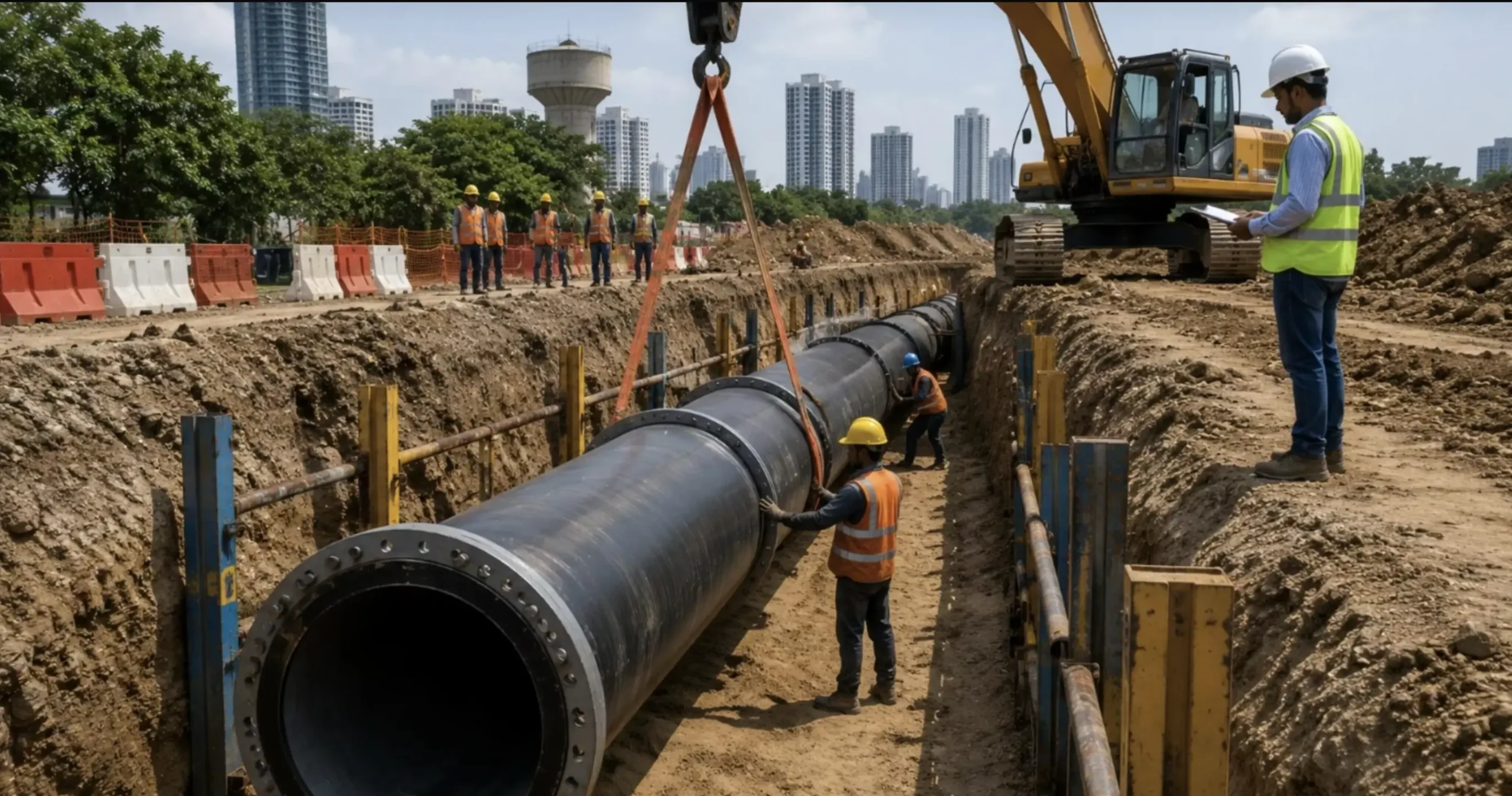
India's infrastructure is entering a new era where intelligence is becoming as important as physical construction. Across power utilities, water supply networks, transportation systems, urban development projects, and public services, digital technologies are transforming how infrastructure is planned, monitored, operated, and maintained.
Today, the success of infrastructure is measured not only by its scale but also by its ability to operate efficiently, adapt quickly, and optimise the use of valuable resources.
This transformation is creating infrastructure that is not only smarter but also more sustainable. Technologies such as Supervisory Control and Data Acquisition (SCADA), Internet of Things (IoT) sensors, cloud computing, artificial intelligence (AI), Geographic Information Systems (GIS), Building Information Modelling (BIM), and advanced analytics are enabling governments and utilities to make informed decisions based on real-time data.
The result is reduced energy consumption, lower water losses, improved operational efficiency, faster service delivery, and better long-term asset performance.
For a rapidly urbanising country like India, where infrastructure demand continues to grow alongside environmental challenges, digital transformation has become an essential component of sustainable development rather than an optional technology upgrade.
Why Digital Infrastructure Matters More Than Ever
Infrastructure assets are designed to serve communities for several decades. Power distribution networks, water pipelines, roads, urban transport systems, and public buildings represent long-term investments whose operational efficiency determines not only service quality but also their environmental footprint.
Historically, many infrastructure systems have relied on manual inspections, periodic reporting, and reactive maintenance. While effective in earlier decades, these approaches often result in delayed fault detection, inefficient resource utilisation, higher operating costs, and avoidable losses of electricity and water.
Digital infrastructure changes this operating model entirely.
Instead of relying on periodic assessments, intelligent infrastructure continuously collects, analyses, and communicates operational data. Field devices, sensors, control systems, and centralised command centres provide operators with real-time visibility into asset performance, allowing issues to be identified before they escalate into service disruptions.
For example:
- A power utility can detect abnormal load conditions before they cause equipment failure.
- A water utility can identify pipeline leaks within minutes instead of days.
- Urban authorities can monitor project progress digitally rather than relying solely on physical inspections.
- Traffic management centres can optimise signal timings dynamically to reduce congestion and fuel consumption.
Each improvement may appear incremental, but collectively they produce significant gains in operational efficiency, resource conservation, and environmental sustainability.
Sustainability Begins with Operational Efficiency
Discussions around sustainable infrastructure often focus on renewable energy generation or green construction materials. While these remain critical, the operational performance of infrastructure throughout its lifecycle has an equally important impact on sustainability.
Every unit of electricity lost through inefficient distribution networks, every litre of treated water lost through undetected leakage, and every hour of unnecessary equipment downtime contributes to increased resource consumption and higher operating costs.
Digital transformation addresses these inefficiencies by enabling infrastructure operators to:
- Monitor assets continuously
- Automate operational processes
- Predict equipment failures
- Optimise energy consumption
- Improve maintenance planning
- Reduce resource losses
- Enhance decision-making using real-time data
Rather than replacing existing infrastructure, digital technologies maximise the performance of infrastructure that has already been built. This approach supports sustainability by improving resource utilisation while extending the operational life of critical assets.
What Is End-to-End Digital Transformation?
Digital transformation is often misunderstood as simply deploying new software or automating isolated processes. In reality, successful infrastructure modernisation requires a comprehensive approach that connects technology, operations, people, and decision-making across the entire asset lifecycle.
End-to-end digital transformation integrates every stage of infrastructure delivery and management, including:
Planning and Survey
Modern infrastructure projects begin with digital surveys, GIS mapping, drone-based inspections, and data-driven planning that improve project accuracy before construction begins.
Design and Engineering
Building Information Modelling, digital engineering platforms, and collaborative design environments enable multidisciplinary teams to coordinate complex infrastructure projects while reducing design conflicts and construction delays.
Construction Management
Digital project management platforms provide centralised monitoring of project schedules, resource allocation, contractor performance, document management, and quality assurance, improving transparency throughout execution.
Operations and Monitoring
SCADA systems, IoT-enabled sensors, Remote Terminal Units, communication networks, and centralised control centres provide continuous visibility into operational performance, allowing infrastructure operators to monitor assets in real time.
Maintenance and Lifecycle Management
Predictive analytics and condition-based maintenance help organisations move beyond reactive repairs. Equipment health can be monitored continuously, allowing maintenance to be scheduled before failures occur, reducing downtime and extending asset life.
When these technologies operate as one integrated ecosystem rather than as isolated systems, infrastructure becomes more resilient, efficient, and responsive to changing operational demands.
India's Digital Infrastructure Transformation
India's infrastructure modernisation is being accelerated through several national initiatives that emphasise technology-enabled service delivery and operational efficiency.
Programmes such as the Revamped Distribution Sector Scheme are encouraging power utilities to adopt advanced monitoring systems, SCADA, Distribution Management Systems, Outage Management Systems, Geographic Information Systems, and smart metering to improve network reliability and reduce technical and commercial losses.
Similarly, the Smart Cities Mission, Digital India, AMRUT, and the Jal Jeevan Mission are promoting greater use of digital technologies across urban governance, water management, transportation, and public service delivery.
These initiatives demonstrate an important shift in infrastructure development. Success is no longer measured solely by the number of assets constructed but by how effectively those assets perform throughout their operational lifecycle.
As a result, digital transformation is becoming a strategic requirement for governments, utilities, and infrastructure organisations seeking to deliver reliable, efficient, and sustainable public services.
From EPC Delivery to Intelligent Infrastructure
Infrastructure development has traditionally focused on planning, engineering, procurement, and construction. While these remain fundamental, today's projects are increasingly expected to deliver long-term operational intelligence alongside physical assets.
Organisations with expertise in both EPC execution and digital technologies are well positioned to support this transition. By integrating operational technology, information technology, communication networks, cloud platforms, analytics, and automation into infrastructure projects, they help asset owners manage infrastructure more effectively throughout its lifecycle.
Built on the engineering legacy of East India Udyog Ltd. (EIUL), Udyat Smart Solutions represents this evolution by delivering integrated digital transformation solutions for governments, utilities, and infrastructure authorities.
Rather than treating technology as a standalone component, the approach focuses on connecting physical infrastructure with intelligent digital systems that improve operational visibility, efficiency, and decision-making.
What End-to-End Digital Transformation Looks Like
Successful digital transformation is built around a connected ecosystem where information flows seamlessly between field assets, control centres, enterprise platforms, and decision-makers.
A typical digital infrastructure architecture includes the following layers:
Digital Field Layer
Field devices collect operational information from infrastructure assets. These include:
- IoT sensors
- Smart meters
- Remote Terminal Units
- Intelligent Electronic Devices
- Environmental monitoring systems
- GPS-enabled equipment
- CCTV and surveillance systems
These devices continuously generate operational data relating to energy consumption, pressure, voltage, flow rates, equipment health, and environmental conditions.
Communication Network
Reliable communication infrastructure enables data to travel securely between field assets and centralised control systems.
This may include:
- Optical fibre networks
- Radio frequency communication
- Cellular connectivity
- Satellite communication
- Secure IP networks
Reliable communication is essential for real-time monitoring and remote operations across geographically distributed infrastructure.
Central Command and Control
At the operational level, centralised control centres consolidate data from thousands of connected assets into a unified operational dashboard.
Operators gain real-time visibility into:
- Equipment performance
- Fault locations
- Network status
- Energy demand
- Water distribution
- Asset utilisation
- Maintenance requirements
Instead of reacting to failures, operators can proactively manage infrastructure based on live operational intelligence.
Enterprise Integration
Operational systems are increasingly integrated with enterprise applications such as:
- Enterprise Resource Planning platforms
- Asset Management Systems
- Geographic Information Systems
- Customer Relationship Management systems
- Billing systems
- Workforce Management systems
- Document Management Systems
This integration enables faster decision-making while reducing duplication of information across departments.
Smart Power Distribution
Power distribution networks are becoming increasingly digital as utilities seek to improve reliability, reduce outages, and minimise technical losses.
Advanced solutions typically include:
Supervisory Control and Data Acquisition
SCADA provides centralised monitoring and remote control of substations, feeders, and distribution equipment. Operators can monitor electrical parameters in real time, identify faults quickly, and perform remote switching operations without sending personnel to field locations.
Distribution Management System
A Distribution Management System enables utilities to optimise network performance through applications such as:
- Load balancing
- Voltage optimisation
- Feeder analysis
- Switching management
- Contingency analysis
These capabilities improve network efficiency while supporting a more reliable electricity supply.
Outage Management System
An Outage Management System helps utilities detect, analyse, and respond to power interruptions more effectively.
Its benefits include:
- Faster outage identification
- Quicker service restoration
- Improved crew deployment
- Enhanced customer communication
- Reduced service downtime
Together, SCADA, DMS, and OMS create a digitally connected distribution network capable of delivering greater operational resilience.
Smarter Water Infrastructure
Digital transformation is equally important in water infrastructure.
Water utilities face ongoing challenges such as:
- Non-revenue water
- Leakage
- Pressure fluctuations
- Pumping inefficiencies
- Ageing assets
- Rising operational costs
By deploying intelligent monitoring systems, utilities can continuously monitor:
- Pipeline pressure
- Reservoir levels
- Pumping stations
- Treatment plant performance
- Water quality
- Flow rates
Real-time monitoring enables operators to identify leaks, optimise pumping schedules, reduce energy consumption, and improve service reliability.
Digital technologies also support predictive maintenance, helping utilities address equipment issues before failures interrupt the water supply.
Digital Governance for Urban Infrastructure
Beyond utilities, digital transformation is reshaping how governments plan, approve, monitor, and manage public infrastructure.
Modern digital governance platforms replace fragmented manual processes with integrated systems that improve transparency, accountability, and efficiency.
Applications include:
- BIM-based project management
- Digital Building Plan Approval Systems
- GIS-based urban planning
- Integrated Command and Control Centres
- e-Governance platforms
- Smart mobility solutions
- Asset monitoring dashboards
These systems enable government departments to collaborate more effectively while providing stakeholders with real-time visibility into project progress and operational performance.
The result is faster decision-making, improved regulatory compliance, reduced paperwork, and more efficient use of public resources.
The Role of IoT and Artificial Intelligence
The next phase of infrastructure modernisation extends beyond monitoring to intelligent decision-making.
IoT devices continuously collect operational data from field assets, while artificial intelligence and advanced analytics convert this information into actionable insights.
Examples include:
- Identifying equipment likely to fail
- Forecasting electricity demand
- Optimising pumping operations
- Detecting abnormal operating conditions
- Prioritising maintenance activities
- Improving asset utilisation
- Reducing unnecessary field inspections
As more infrastructure assets become digitally connected, AI-enabled decision support will become increasingly important for improving efficiency, reducing operational costs, and strengthening resilience.
Sustainability Through Digital Intelligence
The environmental benefits of digital transformation are often achieved through thousands of small operational improvements rather than a single technological breakthrough.
Intelligent infrastructure contributes to sustainability by:
- Reducing electricity losses
- Minimising water leakage
- Improving equipment efficiency
- Lowering maintenance-related travel
- Extending infrastructure lifespan
- Optimising resource utilisation
- Reducing unnecessary material replacement
- Supporting data-driven planning
These improvements reduce operational waste while enabling infrastructure owners to deliver better services using fewer resources.
Digital transformation therefore becomes more than an IT initiative. It becomes a practical strategy for building infrastructure that is both economically efficient and environmentally responsible.
Digital Transformation in Action
The benefits of digital transformation are best demonstrated through real-world implementation. Across India, governments and infrastructure agencies are increasingly adopting integrated digital platforms to improve operational performance, strengthen governance, and deliver better public services.
Built on the engineering legacy of East India Udyog Ltd., Udyat Smart Solutions has contributed to this transition by delivering digital infrastructure solutions across the power and urban infrastructure sectors.
One notable example is the implementation of a Supervisory Control and Data Acquisition system together with a Distribution Management System and Outage Management System for Uttarakhand Power Corporation Limited under the Government of India's Revamped Distribution Sector Scheme.
The project covers substations across Haridwar, Rishikesh, and Dehradun, enabling improved network visibility, faster fault identification, and more efficient outage management.
Beyond the power sector, digital governance initiatives have helped modernise public infrastructure administration. Projects delivered by EIUL include BIM-based Digital Project Management Systems for the Andhra Pradesh Capital Region Development Authority, an integrated project management system for the Madhya Pradesh Road Development Corporation, and CAD-based Building Plan Scrutiny Systems for urban development authorities in Jammu and Kashmir and Assam.
Additional digital governance solutions have supported organisations such as the Punjab Urban Development Authority, Jammu Smart City Limited, and National Highways Logistics Management Limited by digitising approval workflows, improving project monitoring, and increasing operational transparency.
Collectively, these projects illustrate how digital technologies can improve infrastructure performance while supporting better governance, faster decision-making, and more efficient use of public resources.
Quality, Security, and Process Excellence
Large-scale digital transformation requires more than technology. Successful implementation depends on robust governance, standardised processes, cybersecurity, and disciplined project execution.
Internationally recognised management systems help ensure that digital infrastructure projects are delivered consistently while meeting quality, security, environmental, and occupational safety requirements.
For organisations managing mission-critical infrastructure, strong governance frameworks support:
- Standardised project execution
- Improved quality assurance
- Enhanced information security
- Regulatory compliance
- Better service delivery
- Reduced operational risks
- Continuous process improvement
These capabilities become increasingly important as utilities and public agencies expand their reliance on connected digital systems.
The Future of Smart Infrastructure in India
India's infrastructure ambitions continue to expand across power, water, transportation, urban development, and industrial growth. At the same time, infrastructure owners face increasing expectations around operational efficiency, resilience, sustainability, and citizen service delivery.
Emerging technologies are expected to accelerate this transformation over the coming decade.
Some of the most significant trends include:
Artificial Intelligence for Infrastructure Operations
AI will increasingly support predictive maintenance, demand forecasting, network optimisation, and operational decision-making.
Digital Twins
Virtual representations of physical assets will enable operators to simulate infrastructure performance, evaluate maintenance strategies, and optimise asset management before implementing changes in the field.
Edge Computing
Processing operational data closer to field devices will improve response times for critical infrastructure while reducing dependence on centralised computing resources.
Integrated Command and Control Centres
Cities and utilities will continue consolidating multiple infrastructure systems into centralised operational centres capable of monitoring power, water, transportation, surveillance, and emergency response from a unified platform.
Data-Driven Asset Management
Infrastructure owners will increasingly rely on analytics to prioritise investments, extend asset life, improve maintenance planning, and optimise capital expenditure.
Together, these technologies represent the next stage of infrastructure modernisation, where digital intelligence becomes embedded throughout the entire asset lifecycle.
Building Smarter and More Sustainable Infrastructure
India's infrastructure transformation is no longer defined solely by the construction of new physical assets. Increasingly, success depends on how intelligently those assets are operated, monitored, and maintained throughout their lifecycle.
End-to-end digital transformation enables infrastructure owners to improve operational efficiency, strengthen resilience, reduce resource losses, and deliver better public services.
By integrating technologies such as SCADA, IoT, GIS, BIM, AI, cloud platforms, and enterprise applications, organisations can make faster, data-driven decisions while improving the long-term sustainability of critical infrastructure.
For governments, utilities, and infrastructure agencies, digital transformation is becoming a strategic investment that enhances both operational performance and environmental responsibility.
As India's infrastructure ecosystem continues to evolve, organisations that combine engineering expertise with digital capabilities will play an increasingly important role in building smarter, more connected, and more sustainable infrastructure for the future.
Frequently Asked Questions
What is end-to-end digital transformation in infrastructure?
End-to-end digital transformation integrates digital technologies across the complete lifecycle of infrastructure projects, from planning and design to construction, operations, monitoring, and maintenance. It creates a connected ecosystem that improves efficiency, visibility, and decision-making.
How does SCADA improve infrastructure operations?
SCADA enables centralised, real-time monitoring and remote control of infrastructure assets. It helps operators detect faults quickly, improve operational efficiency, reduce downtime, and respond faster to system events.
What role does IoT play in smart infrastructure?
IoT devices collect real-time data from infrastructure assets such as substations, pipelines, treatment plants, and transport systems. This information supports predictive maintenance, remote monitoring, automation, and improved operational efficiency.
Why is digital transformation important for sustainability?
Digital technologies reduce electricity losses, water leakage, unnecessary maintenance, resource consumption, and operational inefficiencies. By improving the performance of existing infrastructure, they contribute to more sustainable and resilient public services.
Which sectors benefit from digital infrastructure solutions?
Digital infrastructure solutions support a wide range of sectors, including:
- Power transmission and distribution
- Water supply and wastewater management
- Urban development
- Smart cities
- Transportation
- Industrial infrastructure
- Government services
- Public utilities